

The power of compounding in mutual funds is one of the most powerful ways to grow your wealth over time. In simple terms, compounding means earning returns not only on your original investment but also on the returns you already earned.
When you invest in mutual funds for a long time, your money starts generating returns, and those returns get reinvested. Over the years, this creates a snowball effect where your investment grows faster and faster.
This is why many financial experts say time in the market is more important than timing the market.
Table of Contents
What is the Power of Compounding in Mutual Funds
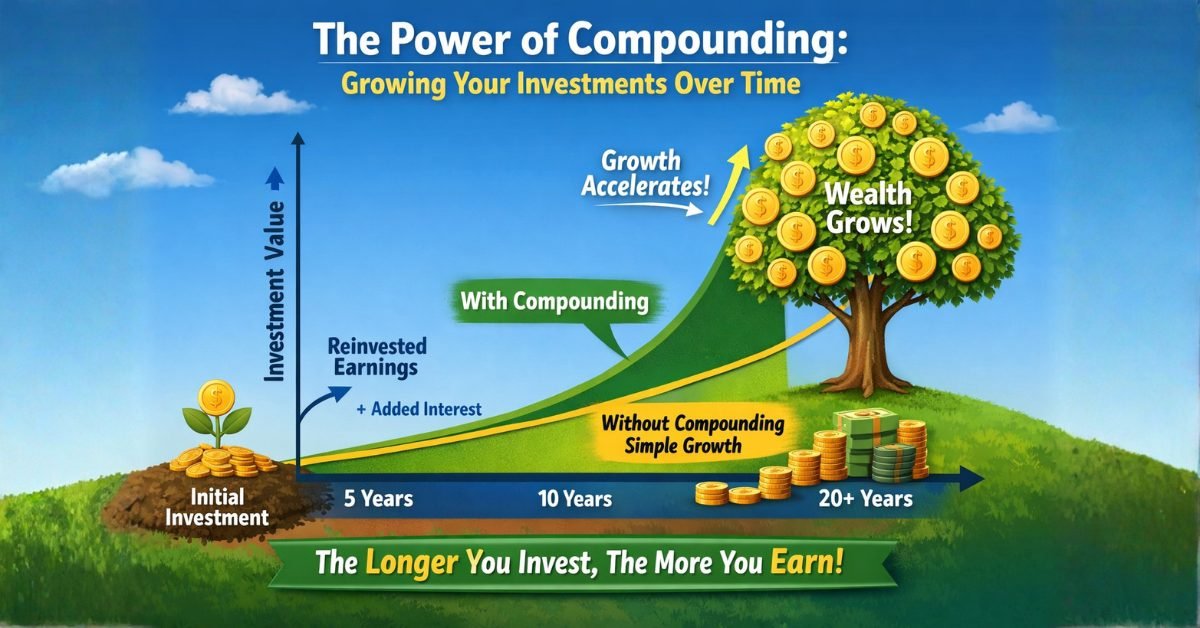
The power of compounding in mutual funds refers to the process where your investment generates returns, and those returns are reinvested to generate additional returns.
Simply put:
Compounding = Returns on your investment + Returns on previous returns.
Over time, this process can significantly increase your wealth.
Mutual funds automatically reinvest earnings, making them an ideal investment for long-term compounding.
If you’re new to mutual funds, you should first understand what is a mutual fund and how they work.
How Compounding Works in Mutual Funds
Compounding works best when investments are held for long periods.
Here’s how the process works:
- You invest money in a mutual fund.
- The fund generates returns through market growth.
- These returns are reinvested automatically.
- New returns are generated on the total amount.
Over time, the investment starts growing exponentially.
Example Flow
| Year | Investment | Return (10%) | Total Value |
|---|---|---|---|
| 1 | ₹1,00,000 | ₹10,000 | ₹1,10,000 |
| 2 | ₹1,10,000 | ₹11,000 | ₹1,21,000 |
| 3 | ₹1,21,000 | ₹12,100 | ₹1,33,100 |
Notice how the returns increase each year.
Example of Compounding in Mutual Funds
Let’s look at a simple real-life example.
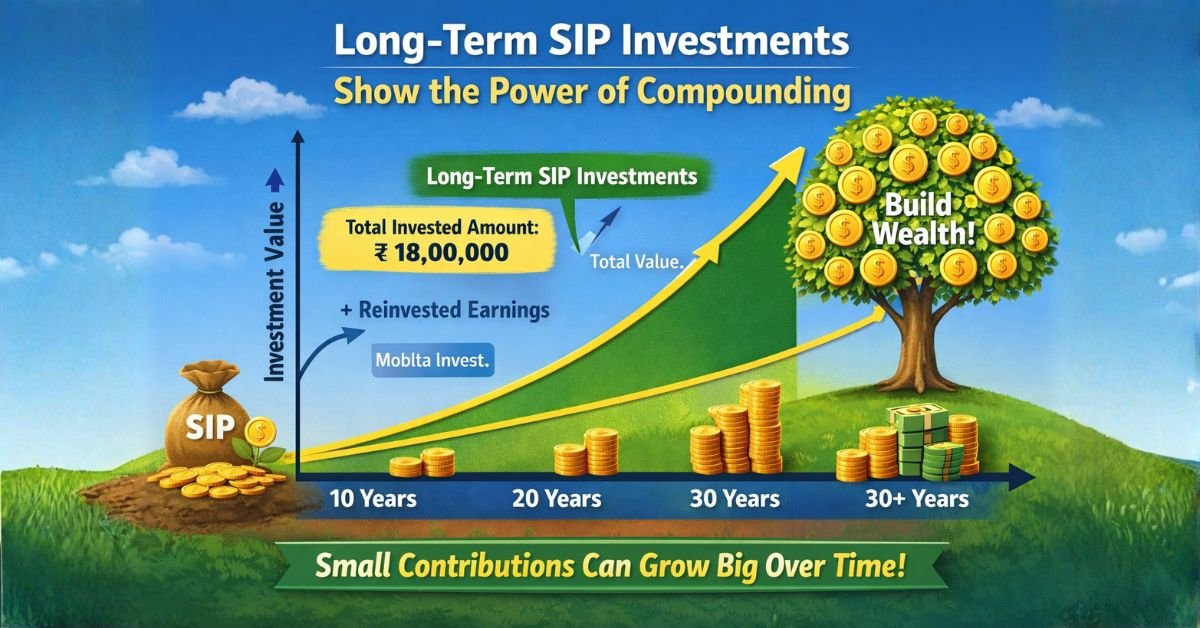
Suppose you invest ₹5,000 per month in a SIP with an average return of 12% annually.
| Investment Period | Total Invested | Approx Value |
|---|---|---|
| 10 Years | ₹6,00,000 | ₹11,60,000 |
| 20 Years | ₹12,00,000 | ₹49,95,000 |
| 30 Years | ₹18,00,000 | ₹1.76 Crore |
Even though you invested only ₹18 lakh, compounding turned it into ₹1.76 crore.
This is why SIPs are powerful tools for long-term wealth creation.
You can learn more about systematic investing in our guide on SIP vs Lump Sum investing.
Benefits of the Power of Compounding
The power of compounding in mutual funds offers several advantages for investors.
1. Wealth Creation Over Time
Even small investments can grow into large amounts if given enough time.
2. Works Best With SIP
Regular investing helps maximize compounding benefits.
3. Passive Growth
You don’t need to actively manage investments every day.
4. Helps Beat Inflation
Long-term equity mutual funds historically generate returns higher than inflation.
5. Encourages Long-Term Investing
Compounding rewards patience and discipline.

Factors That Affect Compounding
Several factors influence the effectiveness of compounding.
Investment Duration
The longer you stay invested, the stronger compounding becomes.
Rate of Return
Higher average returns accelerate wealth growth.
Investment Amount
Higher contributions increase the compounding base.
Consistency
Regular investments help maximize compounding.
SIP vs Lump Sum Compounding
Both SIP and lump sum investments benefit from compounding.
| Feature | SIP | Lump Sum |
|---|---|---|
| Investment Style | Regular monthly | One-time investment |
| Market Timing Risk | Lower | Higher |
| Compounding Effect | Gradual | Immediate |
| Best For | Salaried investors | Investors with large capital |
SIP is generally better for beginners because it reduces market timing risk.
Risks and Limitations of Compounding
While compounding is powerful, it has some limitations.
Market Volatility
Mutual funds are linked to the stock market, so returns are not guaranteed.
Requires Patience
Compounding works best over long periods.
Early Withdrawal
Removing money too early breaks the compounding cycle.
For regulatory information about mutual fund investments, you can refer to Association of Mutual Funds in India (AMFI) and guidelines by Securities and Exchange Board of India (SEBI).
Beginner Tips to Maximize Compounding
Follow these tips to fully benefit from the power of compounding in mutual funds.
Start Early
Even small investments started early can grow significantly.
Invest Regularly
Consistent SIP investments help build long-term wealth.
Stay Invested
Avoid withdrawing investments during market fluctuations.
Reinvest Returns
Always reinvest dividends to maintain compounding.
Increase SIP Gradually
Increase SIP amounts as income grows.
Real Life Example of Compounding
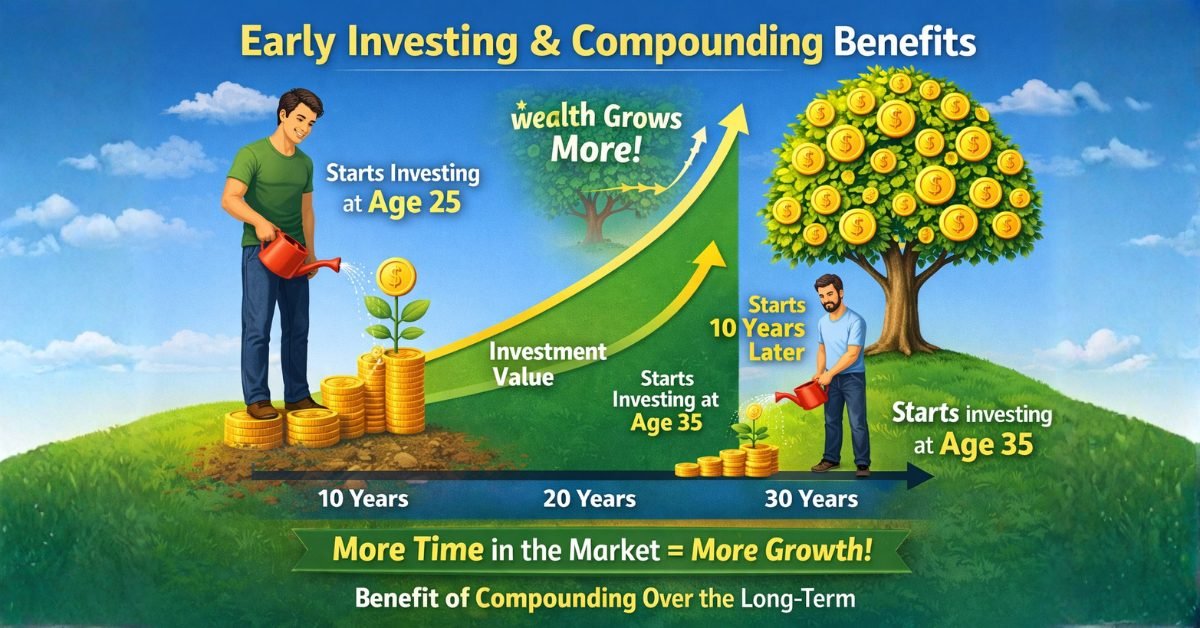
Imagine two investors. Rahul starts investing ₹3,000 per month at age 25 through SIP, while Amit starts the same SIP at age 35. Even though Rahul invests for only 10 extra years, his final wealth may be much higher due to the power of compounding.
Common Mistakes Investors Make
Many investors fail to take full advantage of compounding.
Avoid these mistakes:
• Starting investments too late
• Stopping SIP during market crashes
• Frequent buying and selling
• Expecting quick profits
• Not staying invested long enough
These mistakes reduce the potential benefits of compounding.
FAQs
What is the power of compounding in mutual funds?
The power of compounding in mutual funds means earning returns on both your investment and the returns already generated over time.
How long does compounding take to work?
Compounding becomes powerful after 10–15 years of investing.
Is SIP better for compounding?
Yes. SIP allows regular investing, which maximizes long-term compounding benefits.
Can compounding make you rich?
Compounding can create significant wealth if investments are consistent and long-term.
What is the best mutual fund for compounding?
Equity mutual funds generally offer the best compounding potential over long periods.
Conclusion
The power of compounding in mutual funds is one of the most important concepts every investor should understand. It allows small investments to grow into large wealth over time through reinvested returns.
The key to benefiting from compounding is simple:
Start early, invest regularly, and stay invested for the long term.
Patience and discipline are the real secrets to wealth creation.
Avoid These Compounding Mistakes
- Starting investments late
- Stopping SIP during market corrections
- Withdrawing investments early
- Expecting quick profits
Continue Learning
If you’re new to investing, also read our beginner guides:
• What is Mutual Fund
• SIP vs Lump Sum Investing
• How SIP Works with Example
These guides will help you understand mutual fund investing step by step.

Jitendra Bhandari is the founder of PaisaBhi, a personal finance platform that explains investing, mutual funds, and money management in simple language for beginners in India.
Financial Disclaimer
The information provided on PaisaBhi.com is for educational and informational purposes only and should not be considered financial advice. Investments in mutual funds and the stock market are subject to market risks. Please consult a certified financial advisor before making any investment decisions. Read all scheme-related documents carefully before investing.